

If you’ve been tracking real user performance, you probably already know: Chrome has long supported largest contentful paint (LCP), but Safari until now did not. That’s starting to change, and it’s a big deal if you rely on rumvision for insights.
If you’ve been tracking real user performance, you probably already know: Chrome has long supported largest contentful paint (LCP) since version 79 (which was released on December 10, 2019), but Safari until now did not. that’s starting to change, and it’s a big deal if you want to optimize UX amongst all your visitors.
What’s happening with Safari LCP?
At Interop 2025, a cross browser collaboration event, Apple confirmed that Safari will add native support for LCP (and INP) in 2025. this means your real user monitoring will soon include safari users, giving you a more complete and accurate picture of how your site performs for everyone, not just chrome users.
What’s RUMvision seeing so far?
RUMvision already tracks LCP using real user data for chrome, but safari data has been missing or incomplete until native support lands. With safari joining in, you’ll be able to view full breakdowns, compare across browsers and surface issues you may not even notice in chrome only data.
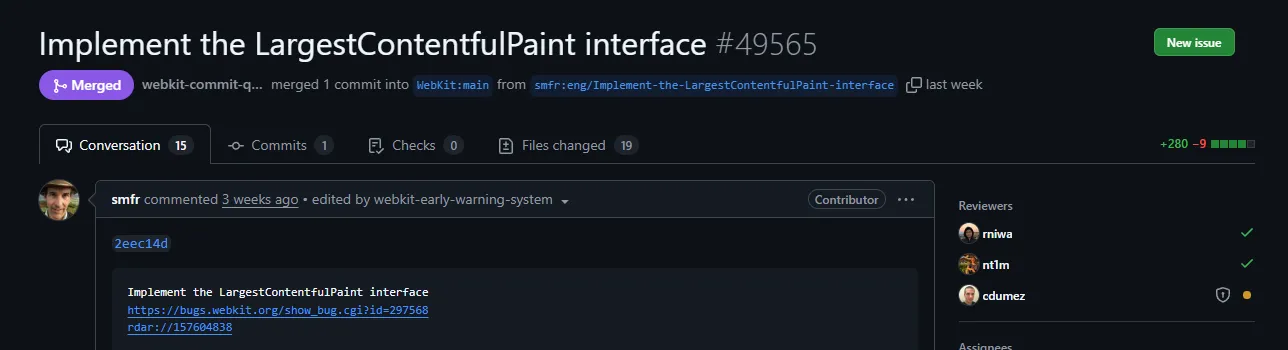
we don’t yet have a specific safari version number tied to shipping LCP. It just landed in the Webkit repository in early september 2025, which means the groundwork is in place. Look out for it first in technology preview builds, and expect a stable release potentially in late 2025 or early 2026.
Why this matters to you
Complete real user visibility: Safari users are often overlooked, but they’re a big part of the audience, especially on mobile or apple devices. soon rumvision dashboards will show their LCP as well.
Better optimisation decisions: Safari handles loading differently, and without measuring its LCP, you might miss slowdowns specific to that platform.
Ahead of SEO and conversions: While Google ranking currently relies on Chrome data, better performance across all browsers still improves engagement, which helps conversion.
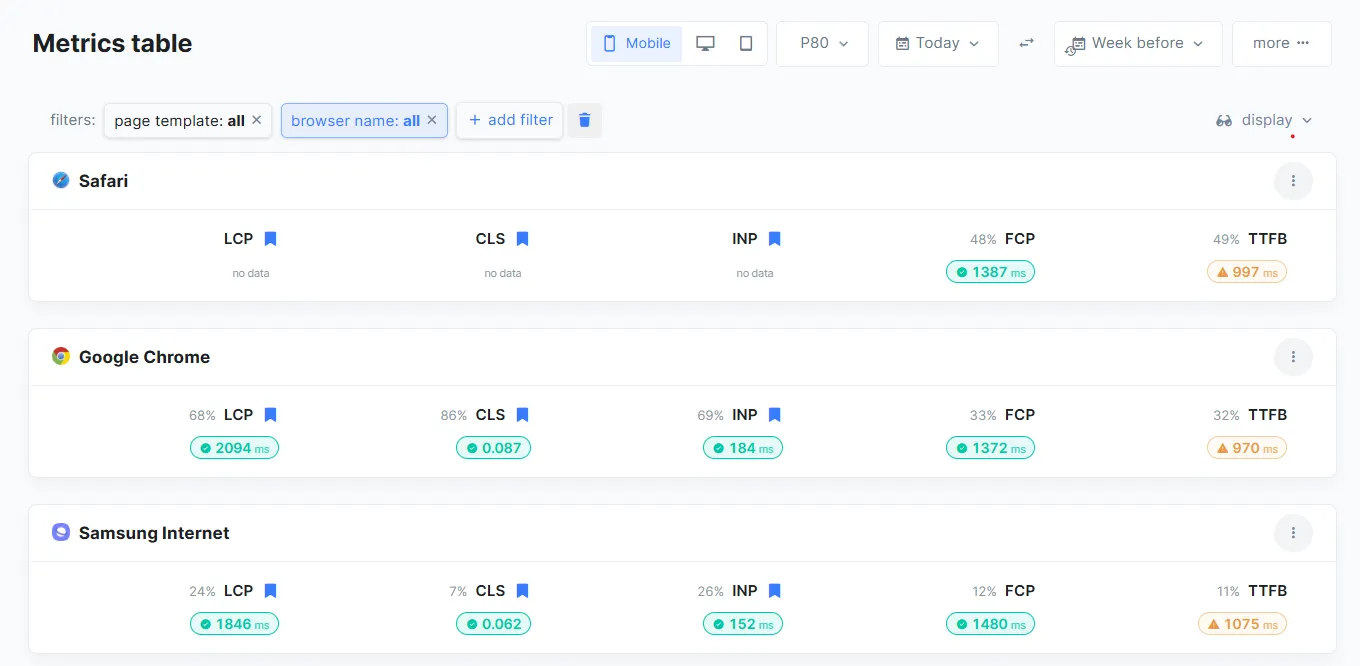
In RUMvision you can currently see no LCP, CLS, and INP data for Safari. That's a shame, because it's the most used browser amongst visitors for a lot of domains.
How to prepare
Audit your current LCP data by channel. once Safari support hits, compare and pinpoint differences. Maybe a hero image loads slower on Safari, or custom fonts hold things up.
When safari LCP support arrives, adjust your alerts and thresholds to include it so you catch performance dips before they affect revenue.
In short
Safari is finally getting LCP support, and it’s coming soon. once it’s live, RUMvision will help you see and act on performance for all your users, not just Chrome.