I’m the co-owner, manage customer success, and the person you’ll probably talk to first when you start using RUMvision. But did you know: four years ago, I was selling organic tea from home?
This interview was conducted by Lars Meijer (Lurz). The other owners of RUMvision have also been interviewed, and articles will be dedicated to them as well, so you can get to know us a little better.
Jordy, you joined RUMvision as a content marketer. Now you’re co-owner. Was that the plan
Not at all. I applied for a job writing content and managing socials. That’s what they needed. But I’m fairly stubborn, and I speak my mind, so I quickly started doing other things. Customer contact, trainings, and strategy all came in my domain. The founders gave me that space. They trusted me with more responsibility early on.
Three years in, they made me co-owner. That’s not something you do lightly, but we built this together.
Before RUMvision, you ran a tea webshop called Herbsy. What was that like?
It was a passion project. I loved e-commerce and wanted to run something myself without becoming one of those annoying dropshippers. So I built a webshop selling organic tea.
The webshop wasn’t profitable. I spent more on ads than I made in sales, but I didn’t care. It was an experiment. And honestly, that Mollie notification telling you someone placed an order? Nothing has matched that feeling since. Thirteen euros in sales maybe cost me fifteen to acquire. But I sold something I built to a complete stranger. That’s a rush.
Do you still get that feeling at RUMvision
It’s different. We don’t touch anyone’s code, but we analyse and advise. But when a developer ships a release, and you’re watching the dashboard together on Slack, and you see that red line just drop. That’s sick. They sped up something and can see it immediately. The instant feedback is what makes it so much fun.
What’s the hardest part of your job?
Getting people to care about site speed in the first place. We’ve been explaining why this matters for years, and for many people it still doesn’t click. People work on performance because they have to, not because it’s fun.
That’s actually why we built the health check for 2.0. I’ve basically been the health check in persona, until now. I look at customer data and tell them what to fix. Soon, that’s automatic. The customer gets concrete action points without needing to become experts first.
You talk to customers a lot. What’s the most common mistake you see?
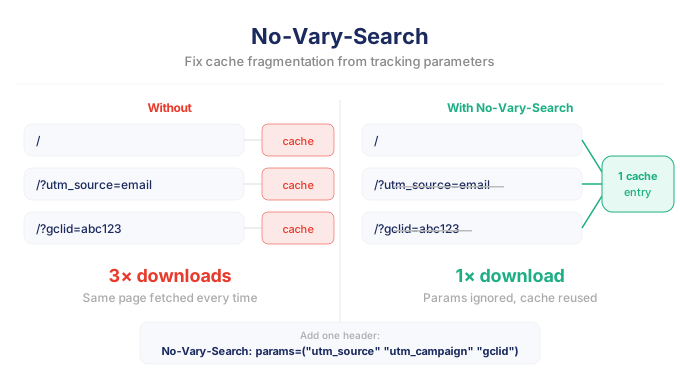
Ad traffic being slower than organic traffic. It constantly happens. When someone clicks on an ad, tracking parameters get added to the URL. Your caching system sees a “new” page and doesn’t serve it from cache. You get the same content, but the page loads slower.
You’re paying two, maybe three euros per click, and then you give those people a torturing experience. That’s expensive, and costs you plenty of clients. Some tiny tweaks can make a huge difference in both customer satisfaction and conversion.
You’ve been here four years now. How have you changed?
Overall, I’m calmer and more patient. I used to work from home all the time. Now I’m at a shared office with other people, and that helps. As a SaaS founder, you can miss the social side. There’s no Friday afternoon drinks, and no colleagues around you. I think I’m more effective now because I’m happier.
Also, I’m better at timing. I like to poke at things, and see how far I can push things. 90% of the time people appreciate it, and it strengthens the relationship. But I’ve learned when to hold back.
What’s next for you?
We’re launching 2.0 soon. That’s the big thing. After that, I want to keep making it easier for people to act on their data. The health check is step one. Next up is business metrics, where we actually show the correlation between speed and revenue. That’s coming too.
We’ve been shouting for years that a faster site makes money. Now we need to start proving it.
Jordy likes talking shop. If you have any questions about site speed, Core Web Vitals, or whether RUMvision is right for you. Lets chat!